
AI Overview
Rubber band ligation is a minimally invasive outpatient procedure used to treat internal hemorrhoids by cutting off their blood supply. The procedure is quick, effective, and offers high success rates with minimal recovery time, making it a preferred piles treatment option in Dubai.
Hemorrhoids are a painful and uncomfortable disease that may affect several individuals in Dubai. Although some treatment methods exist for this issue, rubber band ligation is an option that is becoming popular in treatment because of its minimal invasiveness and effectiveness.
In this blog, you will come to know about this procedure, a step-by-step explanation of how rubber band ligation is performed in Dubai, who is suitable to do it, as well as its results.
What Is Rubber Band Ligation for Hemorrhoids?
Rubber band ligation is a non-surgical hemorrhoid treatment that removes internal piles by cutting off their blood supply.
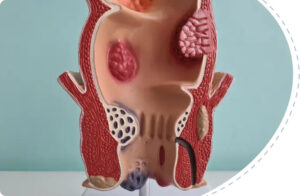
Rubber band ligation is a common non-surgical method of removing piles (hemostatically), most commonly used to treat internal piles. In the process, a rubber band is tied to the bottom of the hemorrhoid, thereby cutting its blood circulation. This leads to the shrinkage of the hemorrhoid, and it falls away after a few days.
This is usually done on an outpatient hemorrhoid procedure, which means patients can go home the same day with very little time to recover. It is a minimal invasive piles treatment that has a high success rate in the treatment of hemorrhoids.
Who Is a Good Candidate for Rubber Band Ligation?
Patients with internal hemorrhoids causing persistent symptoms are ideal candidates for rubber band ligation.
Not all patients with hemorrhoids are ideal candidates for rubber band ligation. The surgery is usually advised in cases where the internal hemorrhoids (hemorrhoids located within the anal canal) are causing moderate to severe symptoms like bleeding, prolapse or pain. Banding is not appropriate in the case of external hemorrhoids and can be subject to alternative treatment.
The optimal candidate is the one who has continuing symptoms despite the change of lifestyle or medications. Also, patients are required to be in good health and free of any contraindication to the procedure.
How Is Rubber Band Ligation Performed Step by Step?
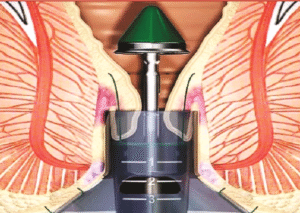
Rubber band ligation involves identifying the hemorrhoid, placing a rubber band, and allowing natural shrinkage over time.
What Types of Hemorrhoids Are Treated with Banding?
Rubber band ligation is primarily used for internal and prolapsed hemorrhoids.
The main ones that are aimed at by the rubber band ligation procedure include internal hemorrhoids, particularly the prolapsed hemorrhoids (those that stick out of the anus) and hemorrhaging ones. Small medium size hemorrhoids usually respond to this technique.
Laser and rubber band ligation are the two most compared minimally invasive hemorrhoid treatments in Dubai, primarily due to differences in pain, recovery, and suitability.
Why Is Rubber Band Ligation an Outpatient Procedure?
The procedure is short, minimally invasive, and does not require hospital admission.
The high advantage of rubber band ligation is that it is an outpatient surgery. The whole treatment usually lasts 10 to 20 minutes, and the patient can generally be discharged the same day.
What Happens During the Pre-Procedure Clinical Assessment?
A clinical examination ensures accurate diagnosis and treatment planning.
Before the procedure, an experienced healthcare professional will conduct a clinical examination, including a thorough assessment of the hemorrhoids. This may include a digital rectal exam or anoscopy to confirm the diagnosis and determine the severity of the hemorrhoids.
How Are Rubber Bands Placed During the Procedure?
Rubber bands are applied at the base of the hemorrhoid to cut off blood supply.
As soon as the hemorrhoids are detected, a rubber band is tied around the bottom of the hemorrhoid with a special instrument. The rubber band will cut off blood to the hemorrhoid, which will shrink and dry up. The majority of the patients complain of minimal or no pain during this phase of the procedure, courtesy of local anesthesia.
What Is the Natural Shrinkage and Detachment Process?
The hemorrhoid naturally dies and falls off within days after banding.
Once the rubber band is put in place, the hemorrhoid will start to shrink and undergo death as a result of no blood supply. The hemorrhoid will fall off by itself in an interval of between a few days and a week. The place where the band was put might be sore in a bit of time, although the pain is not that much.
What Happens to Hemorrhoids After Banding?
Symptoms gradually improve as the hemorrhoid shrinks and detaches.
Patients who have undergone hemorrhoid banding usually show improvement in the symptoms of bleeding, pain, and prolapse. The hemorrhoid band is shrinking and it will come off, generally in a week. In other situations, there are patients who might bleed a little, or discomfort may occur in the process, but such side effects are very mild and usually have a short life.
What Are the Benefits of Rubber Band Ligation Compared to Surgery?
Rubber band ligation offers faster recovery and fewer complications than surgery.
Rubber band ligation has several benefits over conventional types of surgery:
Minimally invasive: The least invasive type does not require any cuts or stitches, which means that it decreases the chances of complications and scarring.
Speedy healing: A majority of the patients can resume regular life within a few days.
Outpatient procedure: You do not need to remain in the hospital, and thus, it is a convenient method for those who have packed schedules.
Great effectiveness: The banding effect is highly high and numerous patients report a lasting relief from the hemorrhoids.
What Results and Success Rates Can Patients Expect?
Rubber band ligation shows high success rates with significant symptom improvement.
The success rate of the rubber band ligation procedure in Dubai is high, and the majority of the patients have recorded significant improvement in their symptoms. Approximately 80-90 per cent of the patients are fully restored to their usual health in a few weeks of treatment. In other instances, however, there might be a need for a second session in case of more severe or recurring hemorrhoids.
Does Rubber Band Ligation Provide Long-Term Symptom Relief?
Long-term relief is achievable with proper aftercare and lifestyle changes.
Lots of patients will experience long-term remission following rubber band ligation. It should be noted, however, that to prevent recurrence, you should adhere to the instructions of your doctor in aftercare. This can involve changing the diet, taking more fiber and having good bathroom manners.
Looking for a Minimally Invasive Piles Solution in Dubai?
Expert care improves outcomes and ensures smooth recovery.
If you’re experiencing the discomfort of hemorrhoids and are looking for a minimally invasive piles solution in Dubai, Dr. Murtaza Pithawala, a renowned laparoscopic surgeon, can help. With extensive experience in outpatient hemorrhoid procedures, Dr. Pithawala offers expert care to ensure effective treatment and a smooth recovery process. Contact his clinic today for more information or to schedule a consultation.
FAQ
Is rubber band ligation an outpatient procedure?
Yes, rubber band ligation is an outpatient hemorrhoid procedure, meaning that patients can usually go home the same day.
How long does the rubber band stay in place?
The rubber band remains in place until the hemorrhoid shrinks and falls off, which typically takes 5 to 7 days.
Does banding remove hemorrhoids permanently?
Rubber band ligation effectively removes the treated hemorrhoid. However, it may not prevent new hemorrhoids from forming in the future, especially if lifestyle changes are not made.
Can rubber band ligation be repeated if needed?
Yes, if necessary, hemorrhoid banding can be repeated for other hemorrhoids or if symptoms return after the procedure.
Who should avoid rubber band ligation?
Rubber band ligation may not be suitable for individuals with external hemorrhoids, certain medical conditions like severe anal or rectal infections, or those with a history of bleeding disorders.